
Escape Rooms: A Faster Path to Team Trust Than Traditional Exercises

Team trust is the foundation of any collaborative work. When there is trust within a team, people don’t over-insure themselves, don’t duplicate tasks one after another, and aren’t afraid to admit a mistake. Classic team-building exercises involving falling into colleagues’ arms, drawing a team crest, and sharing stories about one’s biggest dream don’t always work. But the escape room format proves surprisingly effective.
The Benefits of Escape Room Games in Building Trust
The main weakness of traditional team building lies in its artificiality. Participants understand from the start that this is an exercise and behave accordingly. A colleague who keeps their distance in daily work tells a prepared story about a childhood lesson during the training. This isn’t insincerity; it’s simply a reaction to the format. Everyone plays their expected roles.
In an escape room, that doesn’t happen. There’s no time for prepared answers or carefully crafted phrasing. The timer is ticking, the puzzle isn’t solved, the team is stuck, and a person either acts or doesn’t act. Everything becomes clear on its own.
That is exactly why trust develops more quickly after an escape room. Colleagues see each other in action: who takes the initiative, who notices details, who knows how to listen, and who is capable of admitting a mistake. This experience cannot be gained from a presentation or a questionnaire.
The Social Aspect of Games
In a work environment, people interact within fairly narrow boundaries: meetings, chats, presentations, and formal emails. Everyone presents their “professional persona” to colleagues—restrained, cautious, with carefully chosen words. And that’s normal, because that’s how professional communication works.
The problem is that trust builds very slowly within such boundaries. To truly understand how a person thinks and reacts, it takes years of working on joint projects. Or one hour in an unconventional situation where all the usual social masks simply don’t work.
An escape room provides exactly that kind of situation. And the results are often unexpected. A quiet employee from the analytics department turns out to be the one who first notices an important detail and leads the team to the solution. A manager who is used to calling the shots in meetings calmly hands the initiative over to someone else in this new setting. Colleagues who rarely interacted outside of work-related matters begin to greet each other differently after the game and find it easier to collaborate on projects.

Variety of Game Scenarios
Another strength of escape rooms is the variety of formats. Classic team-building exercises tend to be repetitive. After a year or two, people with some experience have already seen most of the options, and their reactions become predictable.
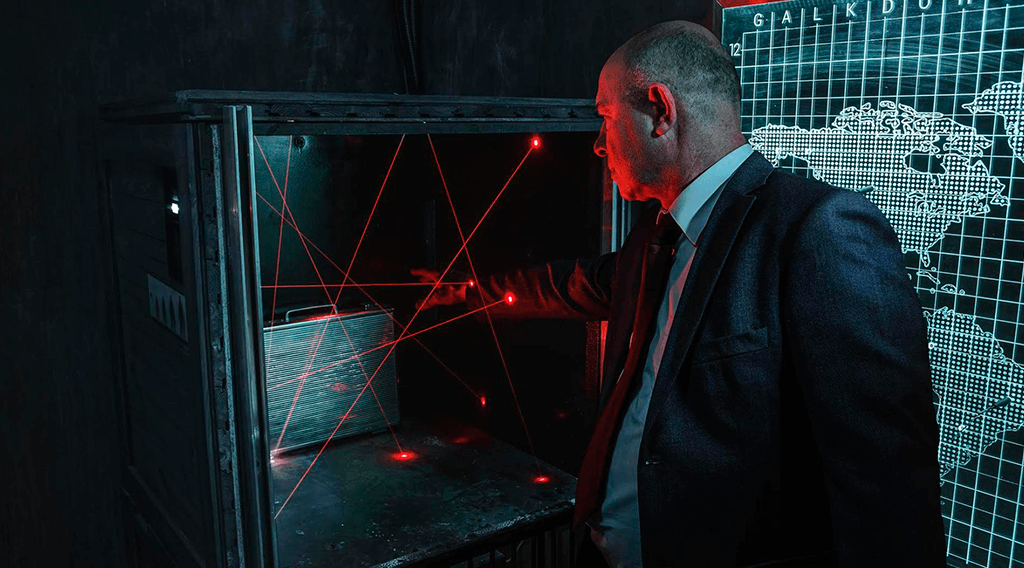
With escape rooms, it’s a different story. Each scenario is a separate story with its own atmosphere, logic, and type of challenges. A detective investigation where you have to find the culprit using circumstantial evidence. A magical room where reality defies the usual rules. A tech-themed scenario with codes and mechanisms. An atmospheric horror experience for those seeking a bigger adrenaline rush.
Different scenarios force the team to try various approaches to collaboration. Sometimes speed wins out, and sometimes methodical thinking or creative problem-solving. As a result, colleagues gain a better understanding of each other’s strengths and then apply that understanding to their work processes.
Audiences and Game Formats
Escape Hour in Edmonton works with a variety of clients, and their requests vary widely. Some come with a group of friends, others book a game for a couple, or organize a corporate event. Each format has its own scenarios and solutions.
The Unique Needs of Different Audiences
We know that every group of people has its own unique needs:
- Private groups. This includes groups of friends, couples, families, and birthday parties. For them, the main priority is quality time and intense emotions. Atmosphere, dynamics, and a sense of adventure are key here. Most scenarios are designed specifically for such groups of two to eight people, with an optimal group size of three to four participants.
- Corporate clients. This is a separate segment with its own objectives. Companies book escape rooms with specific goals: introducing new employees, strengthening collaboration between departments, or using it as a format for a work retreat. For such groups, Escape Hour offers special corporate packages, the option to play simultaneously in multiple rooms, and a follow-up discussion of the results so that the experience from the escape room translates into the workplace rather than remaining just a fun evening.
- Large teams. If a company has 15, 20, or more people, the format is organized accordingly. Teams are divided among rooms, play simultaneously, or compete against the clock. This is a separate format that requires prior coordination with the administrator, but it works best for team building in large departments.
For every request, our consultant selects the best option. You don’t have to worry about how the time will go because it will go perfectly.
What people say about the escape rooms
Reviews on Google Maps, TripAdvisor, and social media are the quickest way to get an idea. Pay attention not only to the overall rating but also to comments from corporate clients: did they mention the quality of organization, was there contact with a manager, and were their expectations for the event met?
Here are some examples of reviews from Escape Hour clients:
"We booked a room for a team-building event for the marketing department, 12 people. We played simultaneously in two rooms, then discussed it in a nearby café. The manager asked about the team’s specifics in advance and helped divide people into groups. The result: a week after the game, there were noticeably more discussions and fewer formal emails in the work chat."
"We came as a team of six developers, just wanting to unwind after a release. In the end, we also got an honest snapshot of how we interact in non-standard situations. Right after the game, I drew several conclusions about the distribution of roles in projects. I recommend it."
"We celebrated the company’s anniversary with 18 people. Escape Hour offered a format with three rooms simultaneously and a timed competition. Everything went smoothly, with clear instructions and no delays. My colleagues talked for a long time afterward about who “beat” whom and why. The atmosphere in the team warmed up noticeably after that."
A separate indicator of quality is the number of scenarios at the location. Escape Hour in Edmonton has eight different rooms, allowing corporate clients to return with a new team and a new scenario without repetition.

In Conclusion
Trust within a team doesn’t come from orders from above and rarely forms during formal training sessions. It is built through shared experiences where people see each other in action. An escape room is a format that creates such a situation in just one hour, without artificial exercises and with real results that are then transferred to work processes.
You can book a game on the Escape Hour website or by phone. A manager will help you choose a scenario tailored to your group size, discuss the details of the corporate format, and suggest the best time. After an hour of play, the team leaves the room with a new understanding of one another.
FAQ
Why are escape rooms particularly suitable for building trust within a team?
An escape room places the team in a situation where they must act together under time constraints. This quickly breaks down formal barriers and reveals how each participant behaves in non-standard conditions. As a result, colleagues gain a better understanding of each other’s strengths, and trust develops naturally through shared experiences rather than theoretical exercises.
How do I book an escape room game?
The most convenient way is to book online by selecting a scenario, date, and time. For corporate bookings, it’s best to contact the administrator by phone: a manager will help you choose a format suited to your group size, arrange for parallel rooms, and discuss organizational details.
Are there age restrictions for participating in the games?
Most scenarios are available without strict restrictions. Some rooms with an intense atmosphere or a more suspenseful plot are recommended for players of a certain age. When booking, please provide the group composition, and the manager will suggest the most suitable option.
What measures are taken to ensure safety during the games?
Before the game, the team receives a briefing; each room is equipped with safety systems, and the option to end the scenario at any time. The Game Master monitors the process throughout the game and is ready to intervene if necessary. This ensures that participants experience excitement and adrenaline, not real stress.


