Escape rooms for small groups: why 3–4 players are ideal

Imagine a quest for ten people. Someone is pressing all the buttons in a row, someone else is already arguing about the “wrong” approach to the lock, and someone else is just standing and watching. The timer is ticking, and the feeling of teamwork is lost somewhere. There is no unity, because many people do not mean a lot of brains and strength.
Now imagine the same room, but there are four of you. Everyone sees their part of the puzzle. No one is standing still. Decisions are made quickly because hearing each other is not a problem. And when you finally leave the room, it's truly your victory. All four of you.
Why the number of players isn't just a number
There is one resource in a quest that cannot be increased: time. 60 minutes is the same for two and eight participants. But what changes is how the team manages it.
A large group creates the illusion of strength. It seems that more people means more ideas and more chances. In reality, more people always create more voices, confusion, and more moments when three people are trying to open the same door at the same time.

A small group has a completely different dynamic. Here, every player counts. No one can “sit in the corner” while others figure things out. There is no excess of opinions that prevent you from moving forward. There is clear teamwork, and you can feel it from the very first minutes.
Three to four players create the perfect synergy
Three to four players is the format where the quest unfolds completely. Here's why:
- The room becomes yours. You don't push each other, shout over each other, or divide the space between ten pairs of hands. You have room to think, move, and notice details that a large group simply cannot see behind other people's backs.
- Everyone feels their role. In a group of three or four people, there are no extras. One keeps track of the big picture and sees the connections between clues. Another methodically checks every item in the room. The third voices their guesses aloud — and that is sometimes the key to the solution. The fourth keeps track of time and prevents the team from getting stuck on one puzzle for too long.
- Communication really works. When there are only a few of you, information is transmitted instantly. “I found three numbers” — and everyone has already heard. No need to shout across the room, repeat yourself twice, or wait for your turn. The team moves as one, and that's what gives you that feeling of real elation when the puzzle is finally solved.
That's why it's the perfect number. Our quest rooms are designed for a larger number of participants. We also host corporate events. But these are slightly different formats. If you want to have fun with your family or friends, come in a small group to get the most enjoyment.
Small group, big emotions
There is one moment in the quest that you will remember for a long time. When, after long deliberations, attempts, and small failures, everything suddenly falls into place — the code fits, the mechanism clicks, the door opens. And you scream with joy.
In a large group, this moment is blurred. Too many people, too many different reactions. Someone has already moved on to the next task, someone else doesn't even understand what happened.
In a group of three or four, this moment is shared. Everyone together. And it is this moment that lives on in memory as “the moment when we understood everything.”
Who is it ideal for?
The 3-4 player format works great for small groups of friends who want something more than just another night at the bar. For couples who have come with another couple and want to not just chat, but experience something together. For four colleagues who are tired of solving work issues in the office. The quest allows you to see each other in a completely different context.
And yes, even for those who have never been to an escape room. A small group is the most comfortable format for a debut. Less pressure, more attention to everyone, easier to get involved in the process.
EscapeHour: a space where a small team plays big
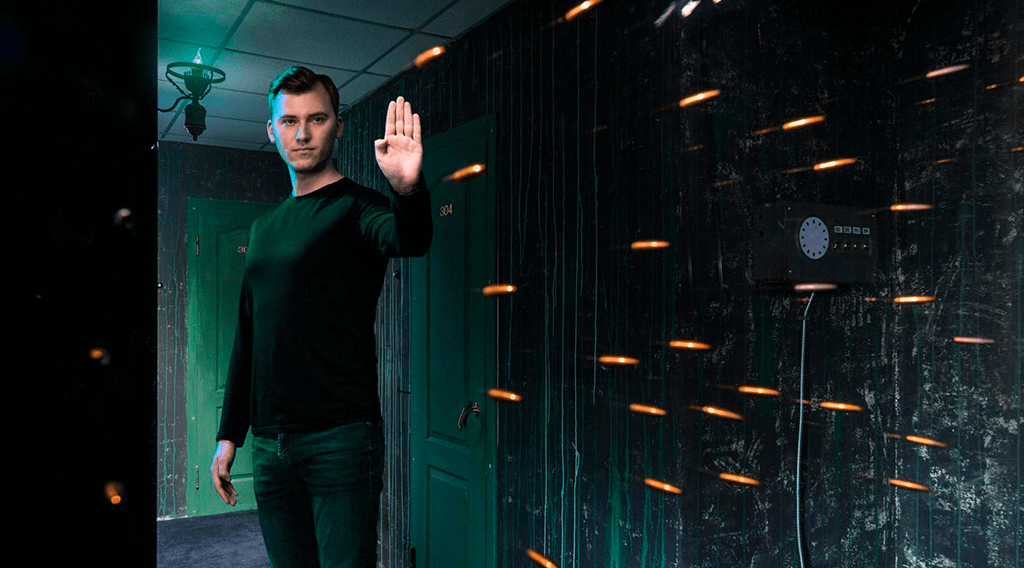
At EscapeHour, the rooms are designed so that a group of 3-4 players can enjoy a full experience without feeling like there aren't enough participants. The scenarios are balanced, the atmosphere is captivating, and the Game Master is always there if the team gets stuck.
You don't have to wait for a large group to gather. Sometimes the best quest is one where there are four of you, the timer is running, and the entire room belongs only to your team.
Book a game on the website or call us. The quest begins when the door closes.
Frequently asked questions
How many people can the quest room accommodate?
We have different formats, but a group of up to 8 people is considered optimal. However, the ideal format for a quest is a group of 3-4 players. Everyone is involved, communication is clear, and everyone feels like they are making a real contribution to the result. A larger group often creates chaos rather than helping.
What if we can't complete the quest room?
The game master will always help if you get stuck at any stage. They won't solve it for you, but will only guide you. Our goal is for quest room participants to get the most enjoyment out of their time.
Can two people come to the quest room and join other players?
Check with the administrator when booking — it depends on the specific format and schedule. We usually try to find the most comfortable option for each group. Our quests can also be played by two people.